Thursday, March 28, 2024

Song of the Telegraph (Charles Burchfield), Sonnet #623


I’ve always seen the world as quivering,

Motes in my eyes, random as Brownian

Motion, more than sight, but delivering

What has been awaited for an eon.

Even rocks I find on Michigan shores,

Which crowd memorabilia on my desk,

Tremble in the dimness the light abhors.

(Rocks have too many answers, so don’t ask.)

Living things are a different matter:

Trees, cats and birds shudder even when still,

And when they move they pretend to shatter

Within a blinked tear that’s started to rill.

What’s not dead is my electricity,

Motion grounding my own haecceity.


Note: haecceity (hakˈsēədē/) means “the property of being a unique and individual thing”

Thursday, March 21, 2024

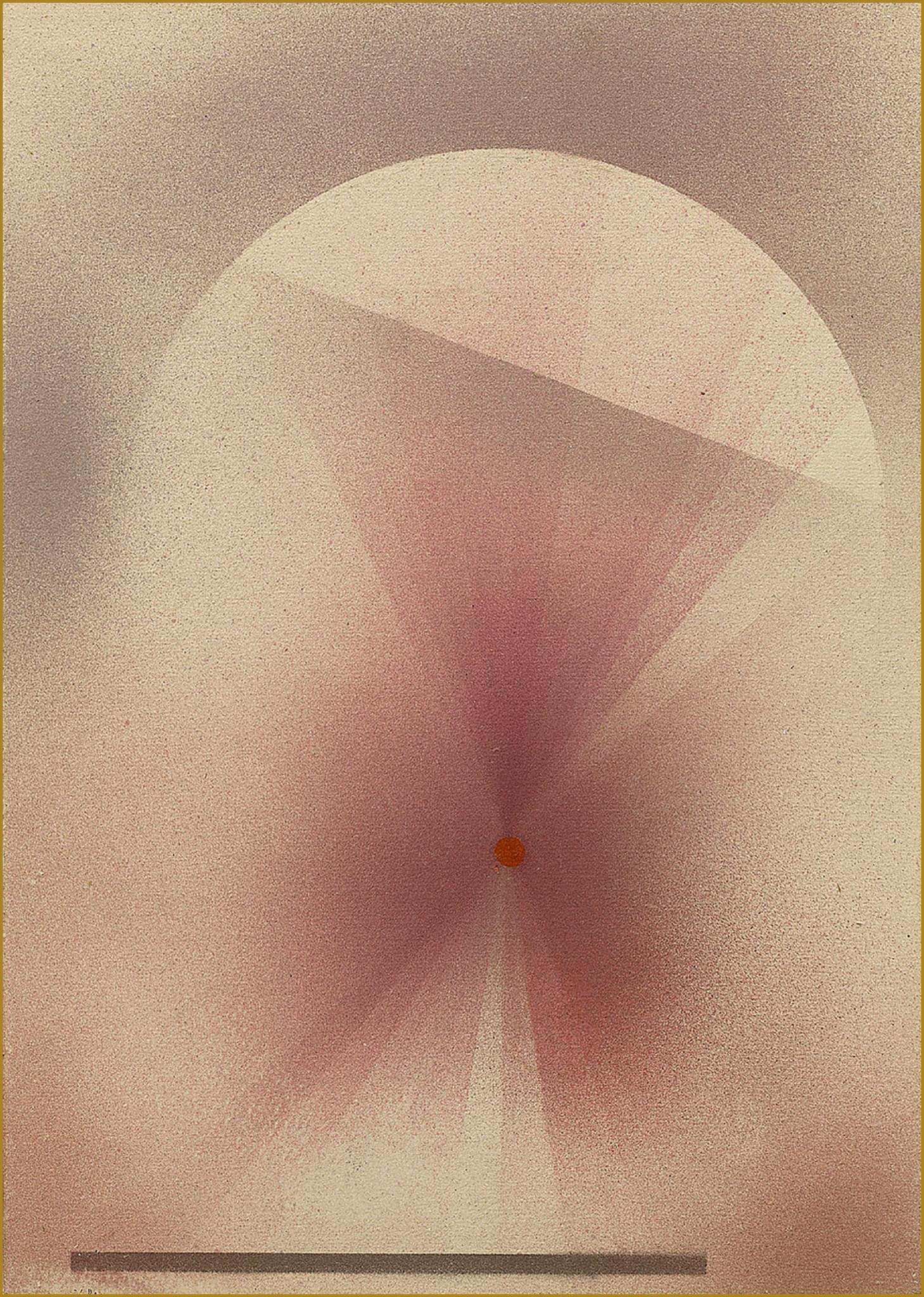
Horizon, Zenith and Atmosphere (Paul Klee), Sonnet #622


I see that cold red dot

At the center of all,

As I stand, myself a spot

Not round, not flat, not tall,

No more than open eyes —

No zenith on horizons,

Just air as thick as sighs

Repeat seeking orisons.

The red dot draws on will

Until I disappear

With nothing to fulfill,

Nothing to find or fear.

At the center of pressure

I can’t take its measure.

Thursday, March 14, 2024

Rose In A Tumbler (Mondrian)


A powder blue flower —
a rose in a short glass,
a seer's whiskey sour,
nature without surface.

A drawing to surpass
reality, it grows,
it seems, to embarrass
red and white roses.

We know the artist’s known
a multiplying power — 
the rose blooming unblown —
an immortal flower.

Thursday, March 7, 2024

The Argument from Design

 The religious impulse, it seems to me, is more about seeking than finding. There’s no greater composer devoted to this search than Gustav Mahler. The most memorable concert I ever attended was when my mother was dying of cancer and Alzheimer’s. 

The Berlin Philharmonic and Claudio Abbado were performing Mahler’s 9th Symphony, a work full of searching, sadness, desperation, resolution, and redemption. At the end of the performance, Abbado did something I’ve never seen a conductor do before, nor since. After the last note, he kept his arms up, pausing everything, the room entirely quiet, for the longest time. He waited and waited, and waited. No one made a sound. It was as though he was saying, “Consider what you have just heard, the sorrow, the wonder, and the searching in this music, and do not despair.” It was a terrifying and joyful moment, and when he finally put his arms down, followed by the loudest applause I’ve ever heard.


There is only one tree in the park.

Not this day only, but every day,

I find that tree when the day grows dark,


Never before dark, when the gray

Leaves are like a whispered amen

To a prayer I wasn’t there to say.


Therefore, I’m cautious and slow when

I start to climb (I believe the tree

Is not unknown to other men);


I test each limb before I leave the

One beneath, without assurance

Any but the lowest will receive me.


Then my doubt subsides where I chance

Upon a tangled branch, ripped free

The time I almost lost my balance.


Now I can move quickly up the tree,

Into its clotted heart, where the dark

Yields, to my callused fingers only,

The life of the one tree in the park.

Thursday, February 29, 2024

Composition

At the point of the intersection
between the theoretical line
and point, there’s a dimension,

not of space, nor of time
(those have been imagined
more thoroughly than I’m

imagined by myself), but of sin.
Not the brand to trouble God,
this sin is words that begin

without being misunderstood
(because the speaker winks!)
and conclude that bad is good.

I think the pine trees think
in theorems, plane geometry;
their sap is magnetic ink,

and the splash of red I see
in rose, cardinal and Mars
is blood escaped from my body . . . 

as if I had come from a star
to civilize this wilderness.
The beach is the registrar

of every grain of sand.  Mass
is energy’s conscience
and confessor.  The soul is a gas.

Yet, right angles, in defiance
of the circle’s perfection,
assume the world, and science
escapes reality’s detection.

Thursday, February 22, 2024

Violence In Peacetime

An Air Force brat, I was so used to soldiers marching by our house, I hardly noticed.

————————————————————————————-

How orderly the mower’s sound,
blades mincing, round and round,

the tender blades of grass.
I hear the boots of soldiers pass

beneath my curtained window,
and don’t wonder where they go.

Thursday, February 15, 2024

Dulle Griet (Pieter Bruegel The Elder)


A creature of prentice alchemy,
slack-jawed butcher, zombie,
wrote the last Deuteronomy
in egg on the first door to Hell.
In breastplate and iron cap (bell
in a tree-tin and distant knell),
Meg schemed the death God would flee
from hated lizards' bite and miss
the jaws of soldier-swigging fish,
but not her blood-sword avarice.
The sick crone ran, her dream to marry
hot in pots and pans she'd carry.

"He is a spy,
a bloodlust fly
circling the sty
above the sky,"

she said as the egg ashes fell
on all red, fecund infidels.
Her barrel insect monster's hiss
excited her waistless bogey-
man's ass to speak; it said, "I
eat and fart and then I die!"
The hysterical diablerie
on the witch inflicted flies.
God's dancing pipers' fantasy,
with spiders from a harp to kill
those who eat apples but can't piss
a lake in payment of the toll,
blow them long and bloody kisses.
His winking, trapdoor-blinkered eyes,
opened wide as windows, see
Mad Meg charge; she desperately
desires to confound her enemy.